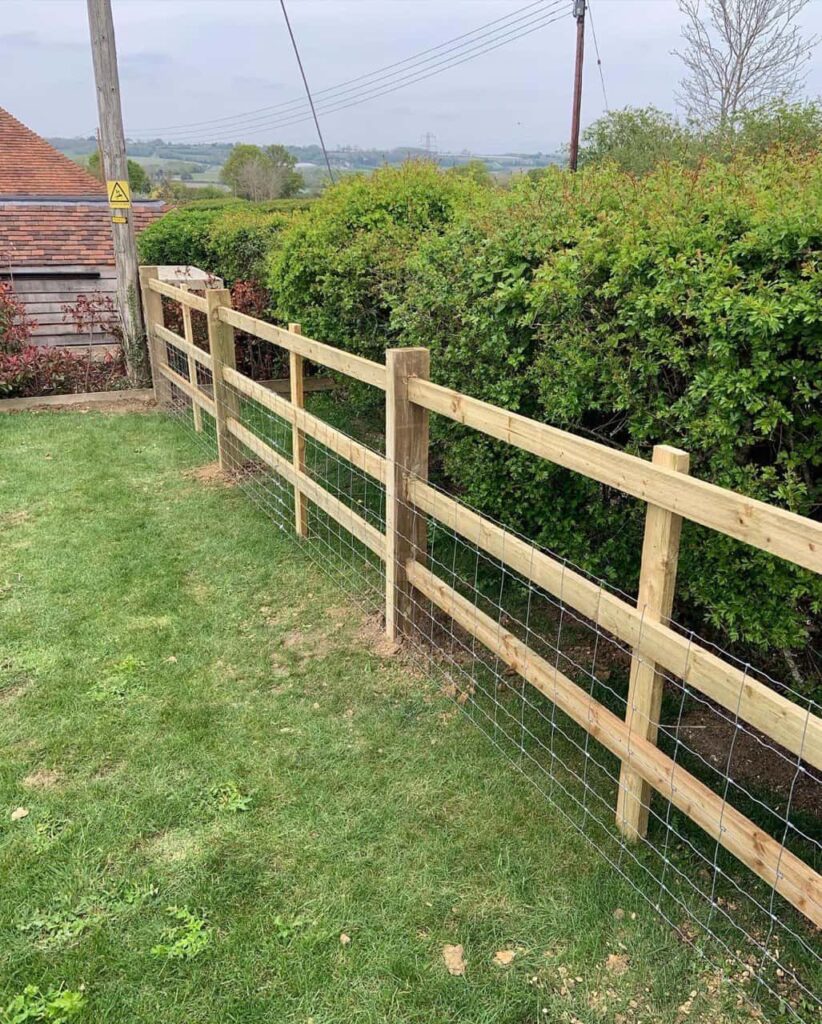
When Does an Existing Post and Rail Fence Need Replacing?
Post and rail fencing is valued for its simple construction, open appearance and ability to create clear, practical boundaries. When properly installed and maintained, it can remain serviceable for a considerable period. However, like any outdoor timber structure, constant exposure to moisture, changing weather conditions and ground movement can eventually affect its stability.
For property owners in Gillingham, Kent, knowing when a post and rail fence can be repaired and when replacement is the better option can help prevent an increasingly unstable boundary from becoming more difficult to manage. At Fast Fix Fencing Gillingham, we assess the complete fence rather than judging its condition from one damaged rail or post alone.
How Can You Tell If Post and Rail Fencing Is Deteriorating?
Some signs of ageing are primarily cosmetic, while others indicate that the structural performance of the fence is beginning to decline.
Warning signs worth investigating include:
- Posts leaning noticeably from their original position
- Timber becoming soft around ground level
- Rails repeatedly coming loose
- Split or severely deteriorated rails
- Posts moving when pressure is applied
- Large sections becoming misaligned
- Multiple previous repairs beginning to fail
- Widespread timber deterioration
One damaged component does not necessarily mean the entire fence needs replacing. The extent and distribution of the deterioration are more important.
The Condition of the Posts Is Particularly Important
The posts form the main structural support for post and rail fencing. If they remain secure, individual damaged rails can often be dealt with without replacing the whole installation.
Problems become more significant when several posts are unstable.
Timber posts are particularly vulnerable around ground level because this is where changing moisture conditions can affect the material over time. A post may appear relatively sound above ground while deterioration lower down has significantly reduced its strength.
If several posts can easily be moved by hand or are visibly leaning, the fence should be professionally assessed.
Does One Rotten Post Mean the Whole Fence Needs Replacing?
Not necessarily.
Where one post has deteriorated but neighbouring posts and rails remain in good condition, localised replacement may be entirely appropriate.
The important question is whether the failed post represents an isolated problem or the beginning of widespread deterioration.
If several posts installed at approximately the same time are showing similar symptoms, further failures may be increasingly likely. In that situation, assessing the complete fence can provide a better understanding of its remaining serviceability.
Loose Rails Can Often Be Repaired
A rail becoming loose does not automatically indicate that the fence has reached the end of its useful life.
Fixings can deteriorate, timber can move slightly over time, and individual rails can become damaged through everyday exposure.
Where the posts remain secure and the timber is otherwise serviceable, individual rails may be repaired, refixed or replaced.
However, rails that repeatedly work loose can indicate movement within the supporting posts. Continually refixing them without addressing the underlying instability may only provide a temporary improvement.
Look for Widespread Timber Deterioration
An older post and rail fence should be considered as a complete structure.
If deterioration is limited to one or two components, targeted repairs can often preserve the remaining fence. When decay, splitting and weakness are present throughout numerous posts and rails, replacement becomes more appropriate to consider.
Widespread deterioration can leave the fence increasingly dependent on repeated repairs, with another weak component failing shortly after the previous one has been addressed.
Leaning Fencing Should Be Investigated
A post and rail fence should maintain a reasonably consistent alignment.
If a substantial section begins leaning, there may be problems with post stability or the surrounding ground. Simply pushing the fence back into position will not resolve the cause if the posts can no longer hold themselves securely.
Localised movement may be repairable. Where numerous posts have moved, rebuilding the affected fence line can provide a more dependable result.
Ground Movement Can Affect an Otherwise Sound Fence
Not every unstable fence has deteriorated because of the timber itself.
Changes within the surrounding ground can affect post stability. If the soil no longer supports a post adequately, the fence may begin leaning even while the visible timber remains reasonably sound.
Professional assessment is useful because the correct solution depends on identifying whether the problem is with the post, its installation or the surrounding ground conditions.
Repeated Repairs Can Be a Sign Replacement Is Due
Previous repairs are not necessarily a reason to replace post and rail fencing. A well-executed local repair can extend the useful life of an otherwise sound installation.
The pattern of repairs matters more.
If different posts and rails are beginning to require attention frequently, the fence may be reaching a stage where deterioration is no longer genuinely localised.
Signs of this pattern can include:
- Several replacement rails
- Numerous weakened posts
- Frequent loose connections
- Recurring leaning sections
- New failures developing soon after previous repairs
At this stage, a broader solution may produce a more consistent and reliable boundary.
Broken Rails Need More Than a Visual Check
A visibly broken rail is easy to identify, but surrounding components should also be inspected.
The rail may have failed because of an isolated impact or natural timber deterioration. Alternatively, movement between the posts may have placed additional strain on it.
Understanding why the rail broke helps determine whether simply replacing it is sufficient.
This is particularly important when several rails along the same fence line show splitting or movement.
When Is Repair Usually the Sensible Approach?
Repair can remain appropriate when the majority of the fence is structurally sound.
Typical situations include:
- One isolated damaged post
- A small number of broken rails
- Localised loose fixings
- Minor damage confined to one section
- Sound surrounding timber
- A fence that otherwise remains stable and correctly aligned
Preserving serviceable fencing can make sense when the underlying structure remains dependable.
When Does Full Replacement Become More Appropriate?
Replacement deserves consideration when problems affect the fence throughout rather than being confined to one small section.
This may be the case where there are multiple unstable posts, widespread timber deterioration, significant misalignment or repeated failures across the installation.
The decision should be based on structural condition rather than appearance alone.
A weathered fence can still be functional, while a relatively tidy-looking fence may contain weakened posts that are no longer providing adequate support.
Partial Replacement May Also Be Possible
The choice is not always between repairing one component and replacing the entire fence.
Where one long section has deteriorated but another remains sound, it may be possible to renew only the affected part.
This can be particularly useful where ground conditions, exposure or previous installation differences have caused one section to deteriorate more quickly than the rest.
A professional assessment can identify whether partial replacement can integrate effectively with the fencing that remains.
A New Fence Provides an Opportunity to Improve the Layout
When replacement does become appropriate, there is no requirement to reproduce the existing fence exactly.
It can be useful to consider whether the current arrangement still suits how the boundary is used.
The position of gates, changes in direction and fence alignment can all be reviewed before new posts are installed. This allows the replacement fencing to respond to the current needs of the property rather than automatically recreating an older layout.
Correct Post Installation Is Essential
The performance of new post and rail fencing depends heavily on its supporting posts.
Accurate spacing, suitable ground preparation and secure installation all contribute to the stability of the finished fence. Rails also need to be properly fitted so that the structure works together as a complete system.
This is why professional fencing installation is about considerably more than simply replacing visible timber.
At Fast Fix Fencing Gillingham, we install and repair post and rail fencing throughout Gillingham, Kent, with attention to the structural condition of the entire boundary.
Why Professional Assessment Can Prevent Unnecessary Replacement
It is not always easy to judge the condition of fencing from appearance alone.
A professional assessment can distinguish between isolated components that require attention and deterioration affecting the overall structure.
This helps avoid replacing serviceable sections unnecessarily while ensuring genuinely unstable fencing is not repeatedly patched without addressing the wider problem.
The objective should be a stable and dependable boundary rather than simply making an ageing fence look better temporarily.
Conclusion
An existing post and rail fence generally needs replacing when deterioration is no longer confined to individual components. Multiple unstable posts, widespread timber decay, repeated rail failures and significant movement along the fence line can all indicate that the structure is reaching the end of its practical service life.
However, individual damaged posts or rails do not automatically justify complete replacement. Where most of the fencing remains stable and serviceable, targeted repairs or partial renewal may provide an appropriate solution.
If your post and rail fencing in Gillingham, Kent, is leaning, deteriorating or requiring increasingly frequent repairs, Fast Fix Fencing Gillingham can assess its condition and determine the most suitable way forward. Contact our team to discuss professional fencing repairs or replacement designed to restore a strong, practical and well-constructed boundary.
Call us on: 01634 564 194
Click here to find out more about Fast Fix Fencing Gillingham
Click here to complete our contact form and see how we can help with your fencing needs.